

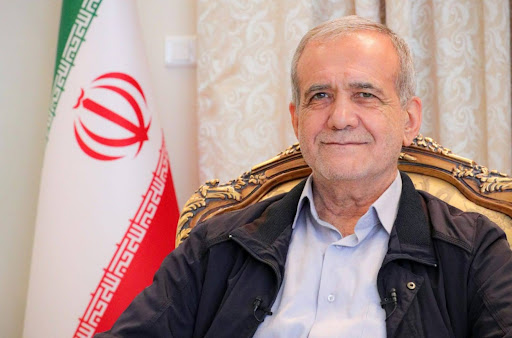
Iranian President Masoud Pezeshkian has made a bold regional play by sending a message to Gulf states that appears designed to fracture the US-led military coalition operating against Iran. His statement, issued as the war entered its second month, explicitly ties Gulf security and development to their decision to deny enemy forces access to their territory. Tehran is clearly pursuing a strategic effort to weaken Washington’s regional military posture by driving a wedge between the US and its Gulf partners.
Gulf nations including Saudi Arabia, the UAE, Kuwait, Qatar, and Oman have been unwillingly drawn into the conflict through their hosting of American military infrastructure. US strikes on Iran have been launched from these countries, which have subsequently been targeted by Iranian retaliatory attacks. The resulting damage has placed enormous pressure on Gulf governments to reconsider the costs of their alliances.
Pezeshkian’s post on X laid out Iran’s military doctrine clearly: no preemptive strikes, but guaranteed and powerful retaliation for attacks on Iranian infrastructure or economic assets. He then appealed directly to Gulf governments, urging them to deny enemy forces the use of their land and framing this as the path to genuine development and security. The message was sophisticated and aimed squarely at the strategic anxieties of Gulf policymakers.
Pakistan has taken an active role in mediating the conflict, with Prime Minister Shehbaz Sharif engaging both Iranian leadership and other regional parties. Sharif’s meeting with Pezeshkian produced the finding that Iran sees trust as the foundation for any future peace process. Pakistan’s approach has been acknowledged and praised by Tehran, enhancing Islamabad’s standing as a credible mediator.
A major multilateral diplomatic meeting in Pakistan is gathering foreign ministers of Saudi Arabia, Egypt, and Turkey for deliberations on the war. Their discussions with Pakistani Foreign Minister Ishaq Dar and Prime Minister Sharif are focused on developing coordinated strategies for de-escalation. The talks are being watched closely as one of the most significant diplomatic initiatives to emerge from the conflict.
