
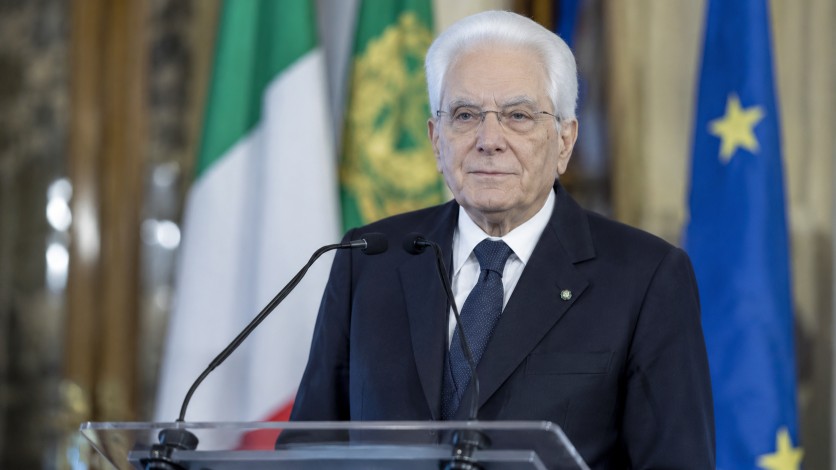
Italian President Sergio Mattarella recently held a meeting with Justice Minister Carlo Nordio to reaffirm the constitutional provision that grants the President the exclusive authority to issue pardons. This clarification comes in the wake of the justice ministry’s decision to initiate pardon proceedings for Mario Roggero, a 72-year-old jeweler. Roggero was sentenced to 14 years and nine months in prison for killing two robbers and wounding another as they fled his shop following a 2021 robbery. The sentence was recently upheld by Italy’s Supreme Court, cementing its finality.
During the meeting, President Mattarella highlighted a 2006 ruling by the Constitutional Court, which confirmed that the power to grant pardons is solely vested in the President. This legal affirmation underscores the importance of adhering to the constitutional framework, especially in cases that provoke significant public and political discourse.
The case of Mario Roggero has ignited widespread debate across Italy, with a spectrum of opinions emerging from the public and political spheres. Some lawmakers and senior officials within the ruling coalition have voiced their support for exploring all legal avenues available, signaling a potential clash between judicial decisions and public sentiment. The incident touches on broader issues of self-defense and judicial fairness, resonating with many Italians.
The justice ministry’s move to explore pardon proceedings reflects the complexities involved in balancing legal protocols with societal views. It also brings to the forefront the critical role of the President in navigating such sensitive issues, particularly when they spur national debate. As discussions continue, the case remains a focal point of attention, emphasizing the intricate relationship between the judiciary and executive powers in Italy.